Payroll
HR for Health powered by Gusto
2024-2025

Payroll
2024-2025
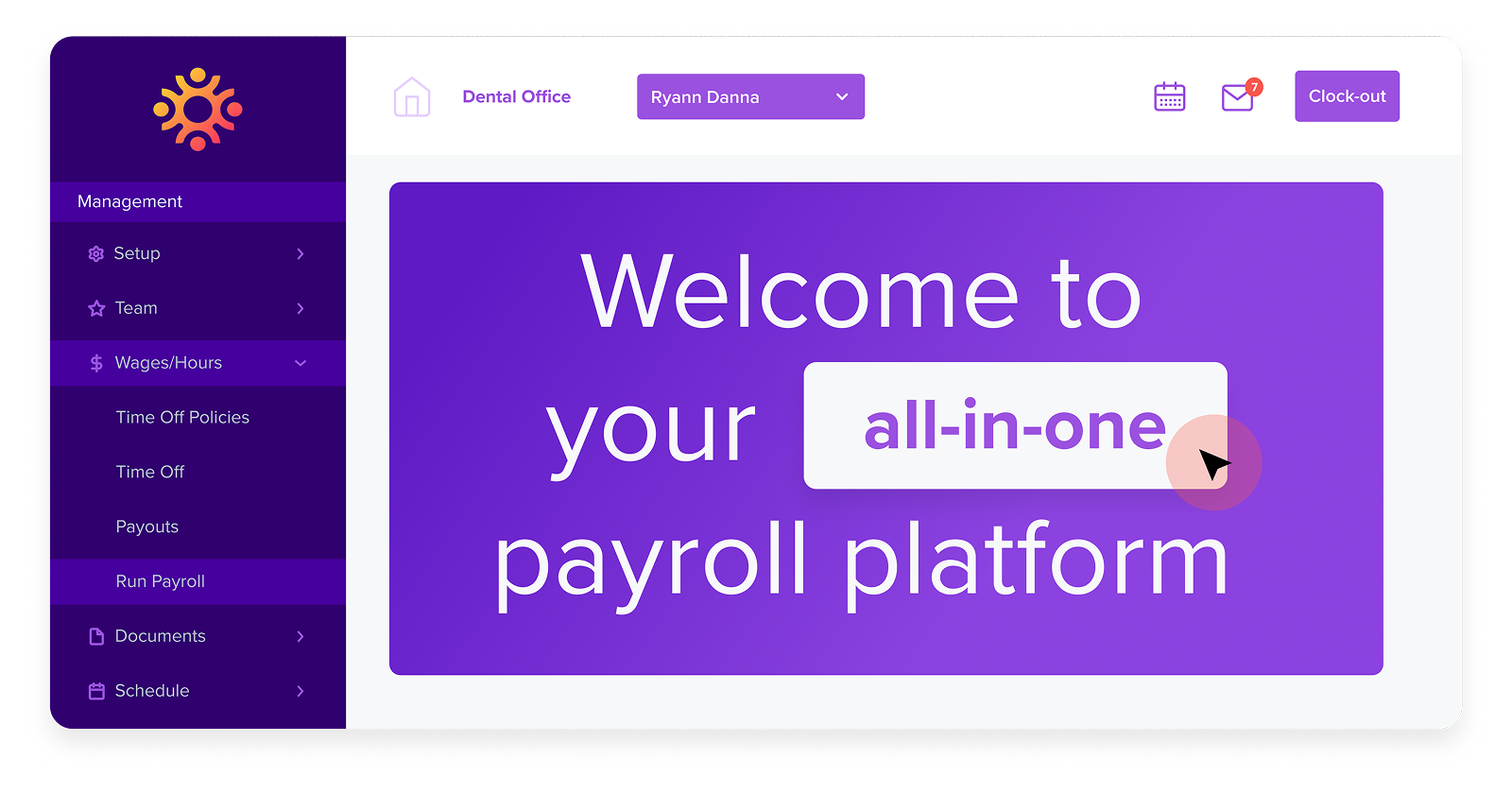
When HR for Health decided to embed payroll directly into their platform — powered by Gusto — they needed a full go-to-market launch across three distinct customer segments, coordinated internal enablement, and a content engine capable of sustaining momentum past launch day.
As Product Marketing Manager, I led the launch end to end. That meant flying to San Francisco to work with Gusto's embedded payroll team in person, co-developing the messaging and positioning framework, then building out everything from email sequences and in-app messaging to webinars, social, a press release, and a 43-page internal GTM playbook.
This wasn't a feature announcement. It required moving existing customers off a legacy payroll provider, convincing others to add payroll to a platform they'd never used it on, and generating demand from net-new prospects simultaneously. Each audience needed a different message, a different tone, and a different sequence — and all of it had to ship at once.
The foundation was the messaging architecture. Working with Gusto's embedded team, I built a positioning framework covering six distinct personas: single-location practice owners, multi-location HR managers, current clients without payroll, clients migrating from Gusto directly, clients migrating from the legacy provider (Asure), and former HR for Health clients. Each had different concerns, different objections, different reasons to care.
One early decision shaped everything downstream: HR for Health wasn't "integrating" with Gusto — payroll was embedded, meaning clients never had to leave the platform. That distinction mattered for trust, for competitive positioning, and for how the sales team talked about it. I codified a "never say integrated" rule in the GTM playbook with clear guidance on what to say instead.
From there, I built out every customer-facing workstream:
Email: Three segmented launch sequences — prospects, Asure migration clients, and existing upsell targets — each with its own value prop and CTA. Followed by a multi-week drip calendar timed to webinar promos, follow-up nudges, and feature education through May.
In-app messaging via Pendo: A full timeline of in-app touchpoints triggered by customer behavior — launch announcements, post-launch tips, upsell prompts for clients still running payroll elsewhere, and migration nudges for clients in queue.
Webinars: Four total. A live product debut on April 11th covering the why, the demo, and the migration path. Two follow-up sessions for prospects who missed launch. A fourth customer-exclusive session for clients hesitant about migrating — a space to ask questions and get direct answers from the team.
Social and blog: A full content calendar supporting the launch across channels, building awareness before launch day and sustaining it after.
Press release and flyer: Both written to reflect the embedded positioning — for media, events, and direct outreach.
Sales and CX enablement: The 43-page GTM playbook covered messaging, competitive comparisons, a payroll battlecard, a PEO battlecard, demo checklists, pricing guidance, objection handling frameworks, and an internal language guide. I also pulled Gusto's sales training resources into the internal toolkit.
For customers being migrated, the job was reassurance. Change anxiety is real for small practice owners. The messaging leaned into the support experience, the managed migration process, and the fact that their HR for Health team — people they already trusted — was handling the transition. The customer-exclusive webinar wasn't a sales event; it was a trust event.
For existing clients without payroll, the job was making the value obvious. They were already in the platform daily. The message: the thing you're doing in a separate tab can now happen here. The Pendo messaging was especially effective for this group because it met them mid-workflow, right when they were already using the product.
For net-new prospects, the job was differentiation. Healthcare-specific payroll isn't crowded, but the trust bar is high. The messaging focused on the embedded experience, transparent pricing, and industry-specific support — proof points generic payroll providers couldn't match.
Going to San Francisco wasn't a formality. It's where the real positioning decisions got made. Because Gusto's embedded product was still relatively new, they were open to building around our audience's needs — and that showed up in everything we produced together.
By launch day, every person on the sales and CX team had a single source of truth: the messaging, the objections, the competitive context, the demo flow, the language guide.